What Is an Automatic Laser Marking Machine?
An automatic laser marking machine is a fiber laser marking system that feeds, positions, and marks products automatically on a production line. Instead of an operator placing each part under the laser head by hand, the machine uses a vibrating bowl feeder and conveyor to move parts one by one, while a CCD camera locates each part before marking.

For factories marking serial numbers, logos, QR codes, production dates, and model numbers at high volume, an automatic marking machine removes manual handling, keeps the mark position consistent, and runs at production-line speed without pauses.
How an Automatic Laser Marking Machine Works
The marking cycle runs automatically in a few tenths of a second:
- Feeding – a vibrating bowl feeder orients and feeds parts one by one onto the conveyor.
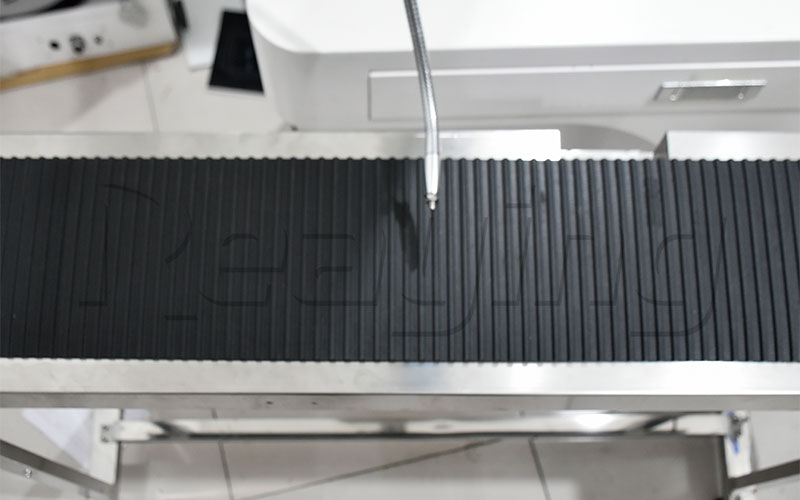
- Transporting – the conveyor moves each part under the marking head at a controlled speed.
- Vision positioning – a CCD camera captures the part, identifies its position and rotation, and corrects the marking coordinates.
- Marking – the fiber laser applies the logo, serial number, QR code, date, or model text.
- Unloading – the part continues to the next process on the line, with no manual handling at any point.
A full cycle takes only a few tenths of a second, so automatic systems can mark up to 10,000 parts per hour depending on part size and configuration.
Key Components
| Component | Function |
|---|---|
| Fiber laser marking head | Generates the beam; 20W / 30W / 50W options selected by material and speed |
| Vibrating bowl feeder | Orients and feeds small, uniform parts one by one |
| Conveyor / indexer | Transports parts through the marking zone |
| CCD camera + vision software | Detects part position and rotation, auto-corrects alignment |
| Control cabinet | Runs the marking program and line synchronization |
What It Can Mark
Automatic marking systems fit high-volume production lines across industries:
| Industry | Typical Products | Marked Content |
|---|---|---|
| 3C electronics | Phone cases, connectors, small PCBs | Logo, serial number, QR code |
| Hardware & fasteners | Screws, nuts, drill bits, wrenches | Brand, size, batch code |
| Auto parts | Small brackets, fittings, sensors | Part number, production date |
| Packaging | Bottle caps, cans, pouches | Date, batch, expiry code |
| Jewelry & accessories | Rings, pendants, clasps | Hallmark, logo, custom text |
The main limitation: the bowl feeder and conveyor handle small, uniform parts. Large or irregular products are better marked with a standalone or handheld machine.
Automatic vs. Manual Marking: What Changes
| Factor | Manual (Operator-Loaded) | Automatic Line Integration |
|---|---|---|
| Labor at the station | 1–2 operators loading/unloading | None |
| Mark position consistency | Varies with each operator | Fixed by vision alignment |
| Rework risk | Misplaced or blurry marks | Vision-corrected, repeatable |
| Speed | Limited by operator pace | Up to 10,000 pcs/hour, line-dependent |
| Traceability | Manual data entry | Serialized marking, online verification |
| Investment | Lower | Higher; requires line integration |
When Do You Need an Automatic Marking Machine?
An automatic machine pays off when:
- You mark more than a few thousand parts per shift
- Parts are small and uniform (suitable for bowl feeding)
- Mark position must be consistent for QC or traceability
- Marking is a bottleneck on your line
- You want to reduce labor cost or hard-to-fill operator positions
A standalone marking machine is still the right choice for large parts, low volume, or frequent product changes.
Reaying Automatic Laser Marking Machines
Reaying builds line-integrated marking systems around its fiber laser marking machines — bowl feeder, conveyor, CCD vision, and a marking head sized to your parts. Contact Reaying with your product size, material, and daily output for a configuration and quote.
Related reading:
- Fiber Laser Metal Marking Machine F20A
- The Composition of a Laser Marking Machine
- Laser Marking vs. Laser Engraving: What’s the Difference
Frequently Asked Questions
How fast is an automatic laser marking machine?
Depending on feeder, conveyor speed, and marking content, automatic systems reach roughly 5,000–10,000 parts per hour. Reaying quotes speed based on your part size and marking requirement.
What’s the difference between automatic and handheld marking machines?
An automatic machine feeds and positions parts itself, and suits one product on a high-volume line. A handheld machine is aimed manually and suits large parts, low volume, or frequent product changes.
Can it mark QR codes and serial numbers?
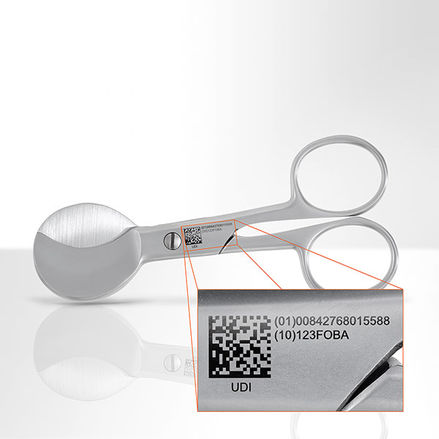
Yes. Fiber lasers produce permanent, high-contrast marks including QR codes, DataMatrix, serial numbers, and production dates, and the vision system can verify the mark after application.
Which materials can it mark?
Metals (stainless steel, aluminum, copper, brass), coated metals, and some plastics. Laser power is selected by material and speed requirements.
How much does an automatic laser marking machine cost?
A complete automatic line (marking head + feeder + conveyor + CCD vision) typically ranges from about $15,000 to $60,000 depending on power and automation level. The automation components drive the price; contact Reaying for a configuration-based quote.
Is it suitable for marking large products?
No. Bowl feeders handle small, uniform parts. Large or irregular products need a standalone marking machine.
Need Help!!!
Categories
Recent Post

Tag Cloud
About Reaying
Shandong Reaying Machinery Co., Ltd. is one of the leading laser machine manufacturers around the world since 2008 with a registered capital of 3 million yuan. It is a high-tech enterprise focusing on R&D...
Read More