How to Choose a Fiber Laser Cutting Machine for Different Metal Materials
Choosing the right fiber laser cutting machine for different metals is not simply a matter of selecting the highest laser power available. The type of metal you process, material thickness, surface condition, cutting speed, assist gas, working area, and machine configuration all affect the final cutting performance.
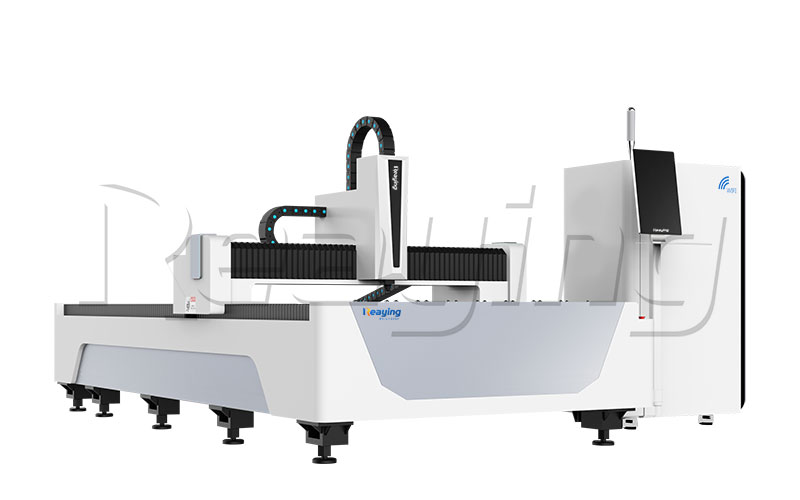
Carbon steel, stainless steel, aluminum, copper, brass, and other metals respond differently to fiber laser cutting. A machine configuration that works well for thin stainless steel may not be the best choice for thick carbon steel or highly reflective copper.
For manufacturers and metal fabricators, understanding these differences before purchasing a machine can help avoid poor cut quality, unnecessary operating costs, and an unsuitable machine configuration.
This guide explains the key factors to consider when choosing a fiber laser cutting machine for different metal materials.
Why Material Selection Matters in Fiber Laser Cutting
Fiber laser cutting machines use a laser wavelength of approximately 1.06 microns, which is efficiently absorbed by many metal materials. However, different metals interact with the laser beam differently.
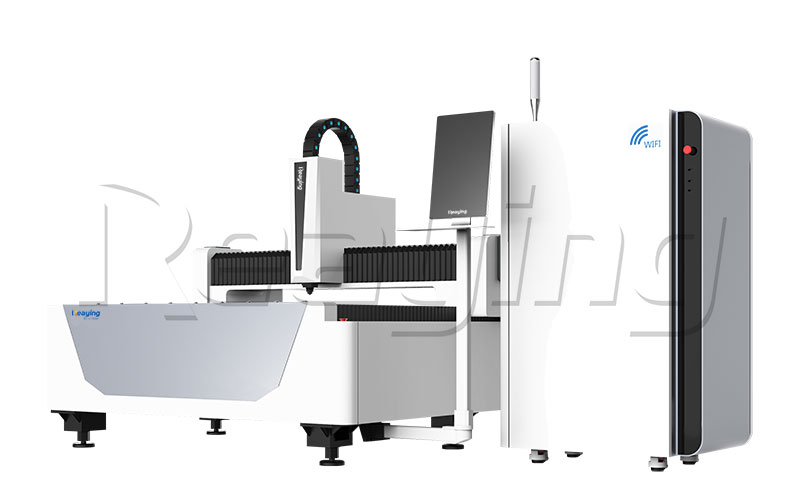
Three material properties are especially important when selecting a laser cutting machine:
1. Metal Reflectivity
Highly reflective metals such as aluminum, copper, and brass require more attention during laser cutting.
A suitable laser source and cutting system should provide appropriate protection against back reflection when processing reflective materials.
2. Thermal Conductivity
Materials with high thermal conductivity, particularly aluminum and copper, transfer heat away from the cutting area quickly.
This can make piercing and cutting more demanding compared with materials such as carbon steel.
3. Material Surface Condition
Rust, oil, coatings, oxidation, and other surface conditions can influence how consistently the material absorbs laser energy.
For this reason, cutting parameters should be adjusted according to the actual material rather than relying only on nominal thickness.
Material Thickness
Thickness is another major factor.
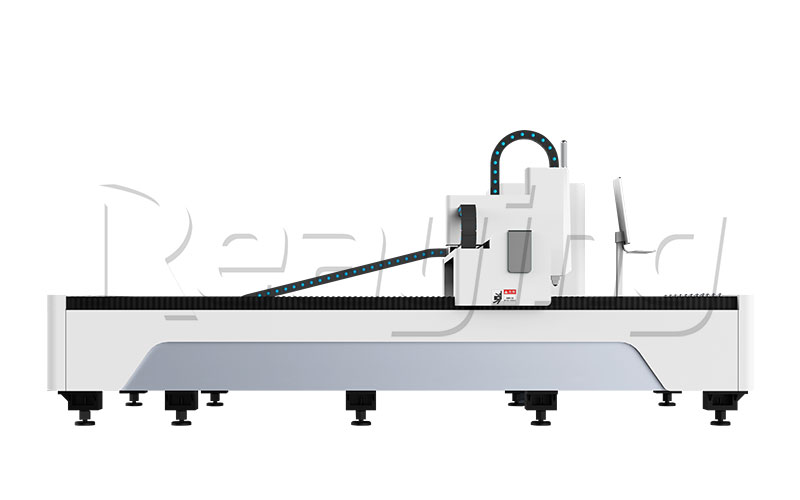
A thin sheet and a thick metal plate may require very different combinations of laser power, focal position, nozzle configuration, assist gas, and cutting parameters.
Therefore, the correct question is not simply:
“How many kilowatts does the machine have?”
Instead, manufacturers should consider:
“What materials and thicknesses will the machine process most frequently?”
Fiber Laser Cutting of Carbon Steel
Carbon steel is one of the most commonly processed materials for fiber laser cutting.
It is generally easier to process than highly reflective non-ferrous metals, making it suitable for a wide range of industrial applications including structural components, machinery parts, sheet metal fabrication, and general metal manufacturing.
For carbon steel, oxygen is commonly used as an assist gas, particularly when cutting thicker material. The oxygen supports the cutting process through an exothermic reaction and can help increase cutting performance.
Key considerations for carbon steel
- Thin sheets: Nitrogen or compressed air may be considered when a cleaner, lower-oxidation edge is required.
- Medium-thickness material: Laser power should be selected according to the thickness range and required production speed.
- Thicker plates: Higher laser power, appropriate focal positioning, and suitable gas pressure become increasingly important.
- Rusty or contaminated surfaces: Surface condition can affect cutting stability and edge quality.
For manufacturers processing a wide range of carbon steel thicknesses, it is important to evaluate the complete cutting system rather than looking only at the laser source power.
The machine frame, motion system, cutting head, CNC controller, gas system, and cooling system all contribute to the final result.
Fiber Laser Cutting of Stainless Steel
Stainless steel requires different cutting parameters from carbon steel.
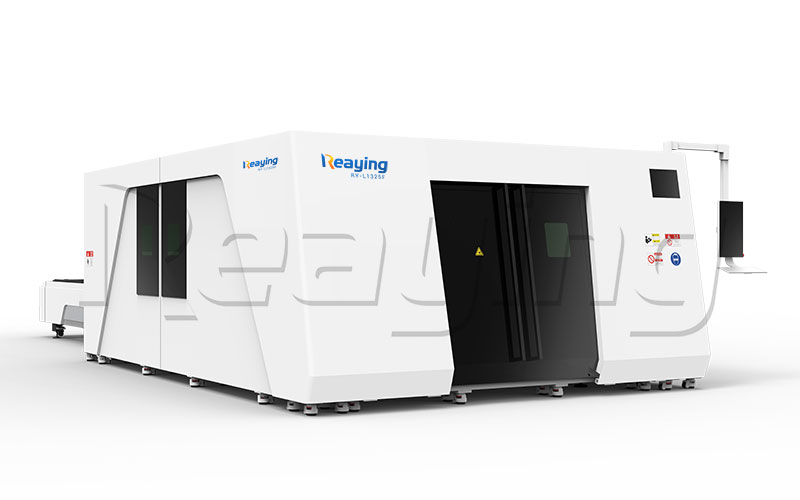
The material is widely used in equipment manufacturing, architectural applications, kitchen equipment, food-processing machinery, industrial components, and many other industries.
Nitrogen is commonly used as an assist gas when a clean, oxidation-free cutting edge is required.
Using nitrogen can help produce a bright and clean edge because it does not introduce the same oxidation effect associated with oxygen cutting.
What should you consider when cutting stainless steel?
Material thickness
Laser power should be matched to the thickness range that the manufacturer processes most frequently.
Assist gas
Nitrogen is commonly selected for applications where edge appearance and oxidation control are important.
Focal position
Correct focal positioning helps concentrate laser energy in the cutting zone and can affect edge quality and cutting stability.
Heat input
Excessive heat can affect the appearance and quality of the cut edge, particularly on thin stainless steel sheets.
For applications such as architectural panels, kitchen equipment, industrial enclosures, and precision sheet metal parts, manufacturers should evaluate actual sample cuts before purchasing a machine.
Fiber Laser Cutting of Aluminum and Other Non-Ferrous Metals
Aluminum, copper, brass, and other non-ferrous metals require additional consideration because of their reflectivity and thermal conductivity.
Aluminum has high thermal conductivity, which means heat can dissipate rapidly from the cutting area.
Copper and brass can be even more challenging because of their high reflectivity.
Modern fiber laser systems designed for non-ferrous metal processing may incorporate protection features and optical configurations intended to reduce the risks associated with reflected laser energy.
Aluminum
Aluminum is widely used in transportation, construction, electronics, machinery, and manufacturing.
Depending on the alloy, thickness, and required production speed, different laser power and assist gas configurations may be appropriate.
Nitrogen or compressed air may be used depending on the required edge quality and production requirements.
Copper and Brass
Copper and brass are highly reflective materials.
When selecting a machine for these applications, pay particular attention to:
- Laser source compatibility
- Back-reflection protection
- Cutting head configuration
- Protective optics
- Assist gas requirements
- Material thickness
- Required cutting speed
Because copper and brass cutting performance can vary considerably between machine configurations, manufacturers should request sample cutting tests using their actual materials before making a final purchasing decision.
Titanium
Titanium also requires careful control of cutting conditions and assist gas selection.
The appropriate gas and cutting parameters should be determined according to the specific alloy, thickness, application, and machine configuration.
For difficult or highly reflective materials, actual cutting tests are more useful than relying only on theoretical power specifications.
How Laser Power Affects Metal Cutting Performance
Laser power is one of the most visible specifications when comparing fiber laser cutting machines.
However, higher power does not automatically mean that a machine is better for every application.
Laser power affects the machine’s ability to process different material thicknesses and can influence cutting speed and productivity. At the same time, actual cutting performance also depends on:
- Laser source
- Beam quality
- Cutting head
- Focal length
- Nozzle design
- Assist gas
- Gas pressure
- CNC control
- Machine structure
- Cutting parameters
- Material composition
A useful starting point is to match the machine to your actual production range.
Typical Reference Range
| Material | Typical Laser Power Range | Typical Application |
|---|---|---|
| Thin carbon steel | 1–3 kW | Thin sheet fabrication |
| Medium carbon steel | 4–6 kW | General metal fabrication |
| Thick carbon steel | 8–12 kW | Heavy sheet and plate cutting |
| Stainless steel | 4–8 kW | General stainless steel processing |
| Aluminum | 4–12 kW | Aluminum sheet and plate cutting |
| Copper / Brass | 6–15 kW | Reflective metal processing |
These figures are general reference ranges rather than universal cutting specifications. Actual cutting thickness and speed depend on the laser source, machine configuration, material grade, assist gas, and cutting parameters.
This sentence is important. I recommend keeping it because it prevents the table from looking like Reaying is making a universal technical guarantee.
How to Choose the Right Fiber Laser Power
Instead of choosing the highest available power, start with your actual production requirements.
For example:
If you mainly process thin sheet metal
A lower-power fiber laser cutting machine may provide a better balance between:
- Initial investment
- Cutting speed
- Energy consumption
- Operating cost
- Production requirements
If you process medium-thickness steel
A medium-power machine can provide greater flexibility across different material thicknesses.
If you frequently process thick plates
Higher laser power becomes more important because sufficient energy is required for efficient piercing and cutting.
The best configuration depends on the complete material mix rather than a single maximum thickness number.
Choosing the Right Working Area
The working area is another important factor when selecting a fiber laser cutting machine.
Common sheet sizes include:
- 3000 × 1500 mm
- 4000 × 2000 mm
- Larger customized working areas
The correct table size depends on the sheet dimensions, production workflow, factory space, and expected future orders.
Sheet Size
If most of your raw material is 3000 × 1500 mm, a machine with a corresponding working area can provide an efficient balance between material handling and machine footprint.
If your business regularly processes larger sheets, a larger working area may reduce the need for additional handling or outsourcing.
Tube and Pipe Processing
If you process both metal sheets and tubes, a fiber laser cutting machine with tube-cutting capability may be worth considering.
A machine designed for both sheet and tube processing can help manufacturers handle different types of metal products within one production system.
Automatic Pallet Changer
For high-volume production, an automatic pallet-changing system can reduce loading and unloading time.
This can improve machine utilization and make continuous production more efficient.
Factory Space
Remember to consider the complete equipment footprint.
The required space may include:
- Laser cutting machine
- Laser source
- Chiller
- Dust extraction system
- Gas system
- Electrical equipment
- Material loading area
- Finished-part unloading area
- Maintenance access
A machine should fit not only inside the workshop but also into the actual production workflow.
What to Consider Before Buying a Fiber Laser Cutting Machine
Laser power and working area are important, but they are not the only factors that determine whether a machine is suitable for your business.
Before purchasing a fiber laser cutting machine, consider the following factors.
1. Laser Source
The laser source is one of the most important components of the system.
When comparing different machines, evaluate the available laser source options, power range, expected application, service support, and compatibility with the materials you intend to process.
2. Cutting Head
The cutting head directly affects laser focusing and cutting performance.
Consider the cutting head configuration, protective optics, autofocus capability, and compatibility with your intended material thickness range.
3. Assist Gas System
Different materials may require different assist gases.
Common options include:
- Oxygen
- Nitrogen
- Compressed air
The appropriate gas depends on the material, thickness, desired edge quality, and production requirements.
A stable gas supply and appropriate pressure control are important for consistent cutting.
4. Cooling System
The laser source and other optical components require appropriate cooling.
An adequately configured chiller helps maintain stable operating conditions and supports long-term equipment reliability.
The cooling capacity should be matched to the laser power and machine configuration.
5. CNC Controller and Software
The control system affects daily operation and production efficiency.
Before purchasing, evaluate:
- CNC control interface
- Nesting software
- CAD/CAM compatibility
- File import capability
- Automatic parameter settings
- Operator usability
A user-friendly control system can reduce operator training requirements and help minimize programming errors.
6. Machine Structure
The machine frame and motion system are particularly important for long-term use.
A stable machine structure helps maintain positioning accuracy and cutting consistency during continuous operation.
When comparing machines, do not evaluate only the laser source.
The complete machine should be considered as a system.
7. Maintenance and Technical Support
Consumable and replacement components can affect long-term operating costs.
Before purchasing, ask about:
- Protective windows
- Nozzles
- Focus lenses
- Filters
- Chiller maintenance
- Spare parts availability
- Technical support
- Installation and training
A reliable supplier should be able to provide technical support throughout the machine’s service life.
Always Test Your Actual Materials Before Buying
One of the most important steps when choosing a fiber laser cutting machine is to perform an actual cutting test.
Do not rely only on a brochure’s maximum thickness specification.
Send the supplier your actual materials and test:
- Carbon steel
- Stainless steel
- Aluminum
- Copper
- Brass
- Different material thicknesses
Then evaluate:
- Cutting speed
- Edge quality
- Dross
- Kerf
- Piercing performance
- Cutting stability
- Material deformation
- Gas consumption
A proper sample-cutting test gives you much more useful information than simply comparing laser power numbers.
How to Choose the Right Fiber Laser Cutting Machine
The right machine depends on your specific production requirements.
Before making a purchasing decision, define:
1. What materials do you process?
Carbon steel, stainless steel, aluminum, copper, brass, or a combination?
2. What thicknesses do you normally cut?
Identify your most common thickness rather than choosing a machine based only on the maximum thickness you may process occasionally.
3. What sheet sizes do you use?
Select a working area that matches your standard raw material.
4. What production volume do you need?
Higher-volume production may benefit from higher laser power, automatic pallet changing, and other automation features.
5. What edge quality do you require?
The required edge appearance may influence the selection of laser power, assist gas, cutting head, and cutting parameters.
6. Will your requirements increase in the future?
If you expect to process thicker materials or add new metal types later, it may be worthwhile to select a more flexible machine configuration.
Reaying Fiber Laser Cutting Solutions
For manufacturers looking for a fiber laser cutting machine for different metals, Reaying provides laser cutting solutions for metal sheet and tube processing.
The appropriate configuration can be selected according to the material type, thickness, working area, laser power, and production requirements.
Reaying fiber laser cutting machines can be configured for applications involving materials such as:
- Carbon steel
- Stainless steel
- Aluminum
- Copper
- Brass
- Other metal materials
Rather than selecting a machine based only on its maximum laser power, manufacturers should evaluate the complete system, including the laser source, cutting head, machine structure, CNC control, cooling system, assist gas system, and working area.
For manufacturers comparing different configurations, a sample cutting test using your actual materials is recommended before placing an order.
Contact Reaying to discuss your material, thickness, sheet size, and production requirements and find a suitable fiber laser cutting machine configuration.
Frequently Asked Questions
What is the best fiber laser cutting machine for carbon steel?
The best machine depends on the carbon steel thickness, sheet size, required cutting speed, production volume, and desired edge quality. Laser power should be selected according to the actual material range rather than maximum advertised thickness.
Can a fiber laser cutting machine cut stainless steel?
Yes. Fiber laser cutting machines are widely used for stainless steel. Nitrogen is commonly used when a clean, oxidation-free cutting edge is required.
Can fiber lasers cut aluminum?
Yes. Fiber lasers can process aluminum, but aluminum’s high thermal conductivity and reflective characteristics require an appropriate laser source, cutting head, assist gas, and cutting parameters.
Can a fiber laser cut copper and brass?
Yes. Fiber lasers can cut copper and brass when the machine is properly configured for reflective metals. Back-reflection protection and suitable optical components are important considerations.
How much laser power do I need?
The required laser power depends mainly on the materials and thicknesses you need to process, as well as the required cutting speed and production volume. A higher-power machine is not automatically the best choice for every application.
What should I test before buying a fiber laser cutting machine?
Test the actual materials and thicknesses that your business processes. Evaluate cutting speed, edge quality, dross, piercing performance, stability, and gas consumption before making a final decision.
Need Help!!!
Categories
Recent Post

Tag Cloud
About Reaying
Shandong Reaying Machinery Co., Ltd. is one of the leading laser machine manufacturers around the world since 2008 with a registered capital of 3 million yuan. It is a high-tech enterprise focusing on R&D...
Read More