Advantages of Laser Welding Machines
Handheld fiber laser welding machines have transformed sheet metal fabrication by delivering faster, cleaner, and more consistent welds than traditional TIG and MIG welding. For shops producing thin-to-medium metal parts, the switch to laser welding cuts production time, reduces rework, and lowers long-term operating cost.
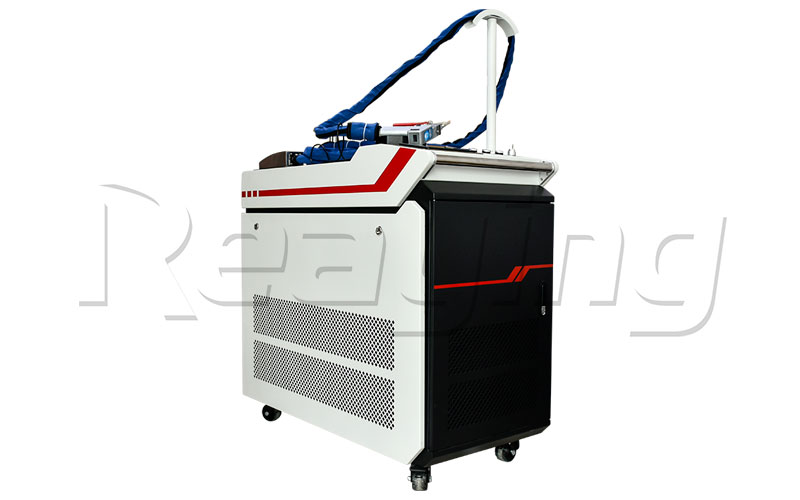
This guide breaks down the 7 core advantages of laser welding, how it compares side by side with traditional methods, and when it is (and isn’t) the right choice.
7 Key Advantages of Laser Welding
1. 3–5× Faster Welding Speed
Laser welding is the fastest process for thin sheet metal. The focused beam melts the joint in milliseconds, and travel speed reaches 2–10 meters per minute depending on material and thickness. For typical 1–3 mm sheet steel work, laser welding completes joints 3 to 5 times faster than TIG welding and roughly twice as fast as MIG. High-speed production lines see the biggest gain.
2. Cleaner Welds & Less Post-Processing
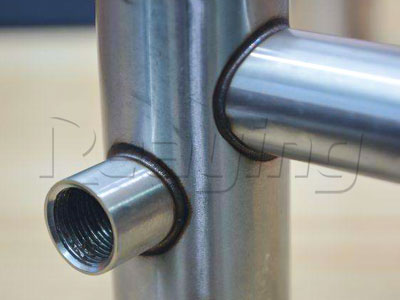
Laser welding produces narrow, uniform beads with minimal spatter and no slag. On stainless steel and polished parts, the weld bead is often smooth enough to use as-is. Traditional welding requires grinding, brushing, and pickling to clean up spatter and discoloration. Laser welding can reduce post-weld finishing labor by 70–80% on visible parts.
3. Minimal Heat Distortion
The laser concentrates energy on a tiny spot, so the heat-affected zone (HAZ) is very narrow. This means almost no warping, even on thin sheets and precision parts. TIG and MIG heat a much wider area, which often causes panels to twist or bow — requiring straightening and rework that adds time and cost.
4. Lower Labor & Skill Requirement
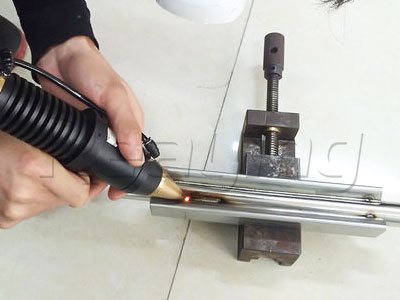
A handheld laser welder is far easier to learn than TIG welding. New operators become productive in 1–2 days of training, rather than the months of experience needed for quality TIG work. This solves the skilled welder shortage many shops face. One operator can also keep up with a much higher production volume.
5. Almost No Consumables
TIG and MIG welding consume filler wire, shielding gas, nozzles, and tips on every job. Laser welding uses only shielding gas and occasional protective lens replacement. Filler wire is optional and only used for thicker joints or gap filling. Over a year of production, consumable cost is a fraction of traditional welding.
6. Multi-Material & Multi-Process Flexibility
Fiber laser welders handle stainless steel, carbon steel, aluminum, copper, brass, and dissimilar metal combinations. Many machines also add laser cleaning and cutting functions, so one tool handles weld seam cleaning, small cutting tasks, and surface preparation — no need to move parts between stations.
7. Consistent, Repeatable Results
Once parameters are set, laser welding produces the same weld every time. There is no variation from operator fatigue, technique differences, or electrode wear. This is critical for batch production, QC compliance, and traceability — every part meets the same standard.
Laser Welding vs. Traditional Methods
| Factor | Laser Welding | TIG Welding | MIG Welding |
|---|---|---|---|
| Speed (thin sheet) | 3–5× TIG | Slowest | Medium |
| Weld appearance | Clean, minimal spatter | Very clean but slow | Moderate spatter |
| Heat distortion | Almost none | Low | Medium |
| Operator skill required | Low (1–2 days training) | Very high (months/years) | Medium |
| Consumable cost | Very low | Medium | High |
| Post-weld finishing | Minimal | Moderate | High |
| Best for | Thin sheet production, visible parts | Precision thick work, pipe | General structural steel |
When Laser Welding Is NOT the Best Choice
Laser welding excels on thin and medium sheet metal, but it is not always the answer:
- Thick steel over 8–10 mm: MIG or submerged arc welding is faster and more economical.
- Large gap fit-up: Laser welding needs tight joint gaps (usually ≤0.5 mm). Wide gaps need filler wire or alternative methods.
- Cast iron repair: High laser heat can cause cracking in cast iron; brazing or stick welding is usually better.
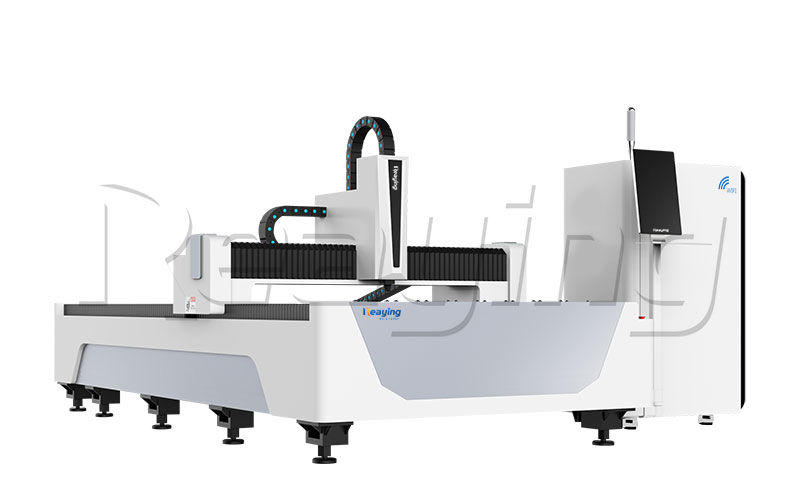
- Fully automated high-volume lines: Robotic laser cells replace handheld machines for 24/7 production.
Reaying Laser Welding Solutions
Reaying manufactures handheld and multi-function fiber laser welding machines for industrial fabrication:
- Handheld Fiber Laser Welding Machine (1000W–3000W) — standard model for general sheet metal and tube welding
- 3-in-1 Laser Welding, Cleaning & Cutting Machine — one tool for welding, seam cleaning, and light cutting
- 5-in-1 Multi-Process Fiber Laser Welding Machine — full flexibility for mixed fabrication workshops
Related reading:
- Fiber Laser Welding Machine: Buyer’s Guide
- What Products Need a Laser Welding Machine?
- Laser Welding Machine Wire Feeder Problems & Troubleshooting
Frequently Asked Questions
How much faster is laser welding than TIG?
For 1–3 mm sheet metal, laser welding is typically 3–5 times faster than TIG. A joint that takes 10 seconds with TIG can be done in 2–3 seconds with a laser welder.
Is laser welding as strong as TIG or MIG?
Yes. With proper parameters, laser welds have full penetration and matching tensile strength. For thin and medium material, laser welds are often stronger and more consistent than manual welds.
Do you need a certified welder to operate a laser welder?
No. Basic operation can be learned in 1–2 days. Laser safety training is required, but you do not need a traditional welding certification to produce quality results.
What materials can a laser welding machine weld?
Stainless steel, carbon steel, aluminum, copper, brass, and most common industrial metals. It also welds dissimilar metal combinations that are difficult with traditional methods.
Is a laser welding machine worth the investment?
For shops welding thin sheet metal at volume, yes. Faster production, less finishing work, and lower labor cost typically deliver payback in 1–2 years. For occasional use only, traditional welding may be cheaper up front.
Can laser welding replace MIG welding?
For thin and medium sheet metal (1–6 mm), yes. For heavy structural steel, thick plate, and large gap joints, MIG and submerged arc welding remain more practical.
Need Help!!!
Categories
Recent Post

Tag Cloud
About Reaying
Shandong Reaying Machinery Co., Ltd. is one of the leading laser machine manufacturers around the world since 2008 with a registered capital of 3 million yuan. It is a high-tech enterprise focusing on R&D...
Read More