What Products Need a Laser Welding Machine?
Handheld fiber laser welding machines have become the standard for thin-to-medium metal fabrication because they produce clean, low-distortion welds at 3–5 times the speed of TIG welding. But not every product benefits equally — laser welding excels on thin sheet metal, precision parts, and products where appearance matters.
This guide breaks down the 7 most common product categories that use laser welding, why they choose it over traditional methods, and when you should stick to other welding processes.
Common Products & Industries That Use Laser Welding
1. Sheet Metal Enclosures & Cabinets
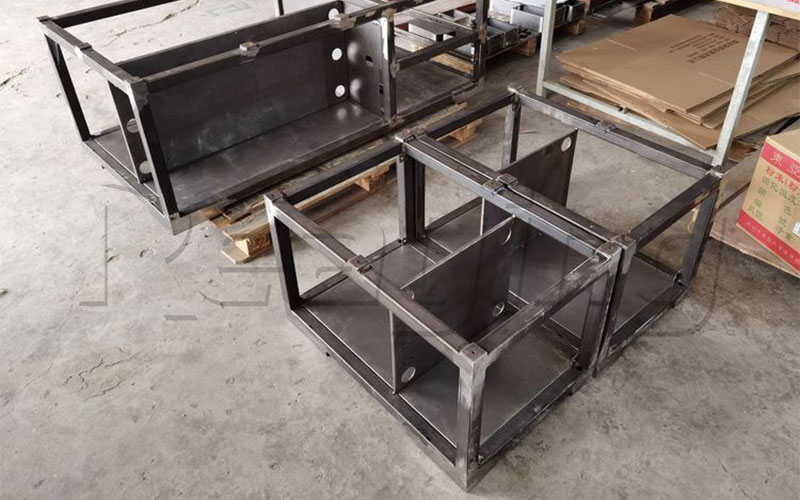
Electrical enclosures, control cabinets, server racks, and junction boxes are the single largest use case for handheld laser welders.
- Materials: cold-rolled steel, stainless steel, galvanized steel (0.8–4 mm)
- Why laser welding: fast straight seams, minimal spatter, no post-weld grinding on visible surfaces, consistent corner welds
- Typical products: distribution boxes, battery enclosures, equipment housings, control panels
2. Kitchen & Bathroom Metal Products
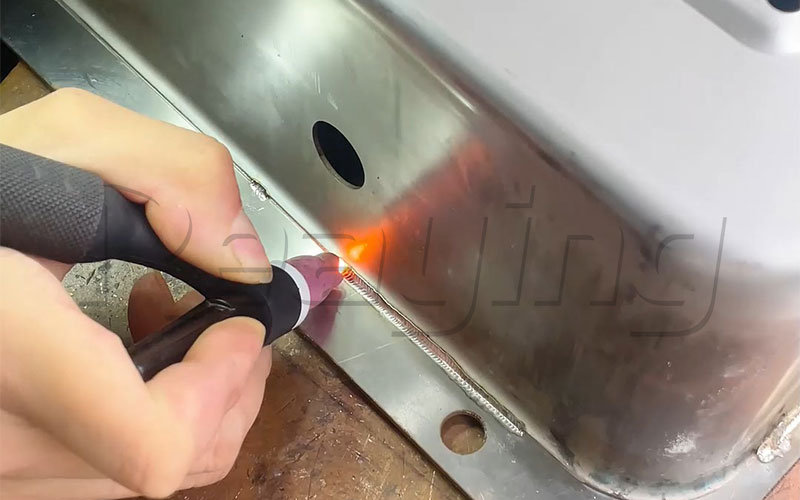
Stainless steel kitchenware and sanitary hardware rely on laser welding for clean, food-safe seams.
- Materials: 304 / 316 stainless steel (0.5–3 mm)
- Why laser welding: no filler wire needed on thin stock, smooth welds that polish easily, no corrosion risk from flux
- Typical products: sinks, range hoods, handrails, towel racks, kitchen shelving, sanitary fixtures
3. Automotive Sheet Metal & Components
Laser welding is widely used in auto body repair, aftermarket parts, and small-component production.
- Materials: mild steel, stainless steel, aluminum (0.8–5 mm)
- Why laser welding: low heat input avoids warping body panels, precise welds on brackets and mounts, consistent bead appearance
- Typical products: chassis brackets, exhaust components, door frames, wheel rims, battery trays
4. Metal Furniture & Decorative Work
Furniture makers use laser welding for clean joints that require minimal finishing.
- Materials: carbon steel, stainless steel, aluminum tube (1–4 mm)
- Why laser welding: no burn marks on visible tube joints, fast production runs, consistent results across batches
- Typical products: table frames, chair legs, stair railings, metal signs, decorative screens
5. Pipe & Tube Fabrication
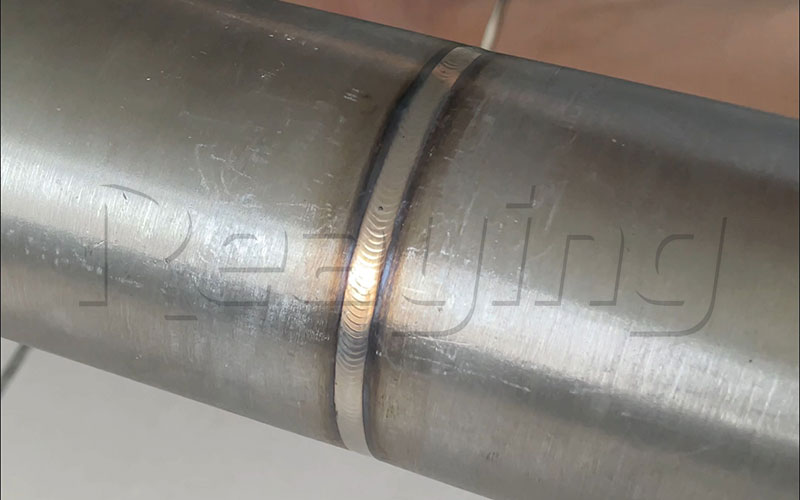
For round, square, and rectangular tubing, laser welding produces strong, clean circumferential and butt joints.
- Materials: carbon steel, stainless steel, aluminum pipe (1–6 mm wall)
- Why laser welding: full penetration without burn-through on thin-wall tube, consistent welds around corners
- Typical products: handrails, guardrails, furniture tubes, scaffolding parts, pipeline connectors
6. Aerospace & Precision Engineering
High-precision industries use pulsed or fiber laser welding for thin, critical components.
- Materials: titanium, aluminum, stainless steel alloys (0.3–2 mm)
- Why laser welding: minimal heat-affected zone, precise control over penetration, no contamination from flux
- Typical products: sensor housings, fuel system components, brackets, instrumentation parts
7. Medical Devices & Instruments
Medical manufacturing demands clean, repeatable, contamination-free welds.
- Materials: 316L stainless steel, titanium (0.2–1.5 mm)
- Why laser welding: non-contact process, no filler required on thin parts, fully automated for consistency
- Typical products: surgical instruments, implant components, syringe needles, medical equipment housings
When Laser Welding Is NOT the Best Choice
Laser welding is not always the answer. These cases are usually better served by other methods:
| Application | Better Method | Reason |
|---|---|---|
| Thick steel over 8–10 mm | MIG / submerged arc | Laser penetration drops off on very thick material |
| Large structural steel beams | Stick / MIG | Joint fit-up gaps are too large for laser welding |
| Cast iron repair | Brazing / stick | Laser heat causes cracking in cast iron |
| High-volume mass production | Robot laser cell | Handheld is too slow for fully automated lines |
Reaying Laser Welding Machines for These Products
Reaying offers handheld and multi-function fiber laser welders matched to the product categories above:
- Handheld Fiber Laser Welding Machine — general-purpose sheet metal and tube welding, 1000W–3000W options
- 3-in-1 Laser Welding, Cleaning & Cutting Machine — ideal for metal fabrication shops that also clean weld seams and cut profiles
- 5-in-1 Multi-Process Fiber Laser Welding Machine — for workshops needing welding, cleaning, cutting, and wire feed options
Related reading:
- Fiber Laser Welding Machine: Buyer’s Guide
- Laser Welding Machine Wire Feeder Problems & Troubleshooting
- What Materials Can a Fiber Laser Welder Weld?
Frequently Asked Questions
What is the most common use for a laser welding machine? Thin sheet metal fabrication — electrical enclosures, cabinets, and stainless steel kitchen products — is the largest application for handheld fiber laser welders.
Can a laser welder weld aluminum? Yes, but aluminum reflects laser energy and requires higher power. A 1500W machine handles thin aluminum; 2000W+ is recommended for 3 mm and thicker aluminum.
Is laser welding better than TIG? For production sheet metal work, yes — it is 3–5 times faster, requires less operator skill, and produces less spatter and distortion. TIG is still preferred for very thin precision work and highly cosmetic welds.
What thickness can a laser welding machine handle? Handheld 1500W machines weld up to about 5 mm stainless steel in one pass. 3000W machines reach 10–12 mm. Thicker material needs multiple passes or alternative methods.
Can laser welding replace MIG welding? For thin and medium sheet metal (1–6 mm), yes. For heavy structural steel and thick plate, MIG and submerged arc welding remain more efficient.
Need Help!!!
Categories
Recent Post

Tag Cloud
About Reaying
Shandong Reaying Machinery Co., Ltd. is one of the leading laser machine manufacturers around the world since 2008 with a registered capital of 3 million yuan. It is a high-tech enterprise focusing on R&D...
Read More