CO2 vs. Fiber Laser Cutting Machine: Which Is Right for You?
Choosing between a CO2 laser cutting machine and a fiber laser cutting machine depends mainly on the materials you need to process. Both technologies are widely used in manufacturing, but they are designed for different applications.
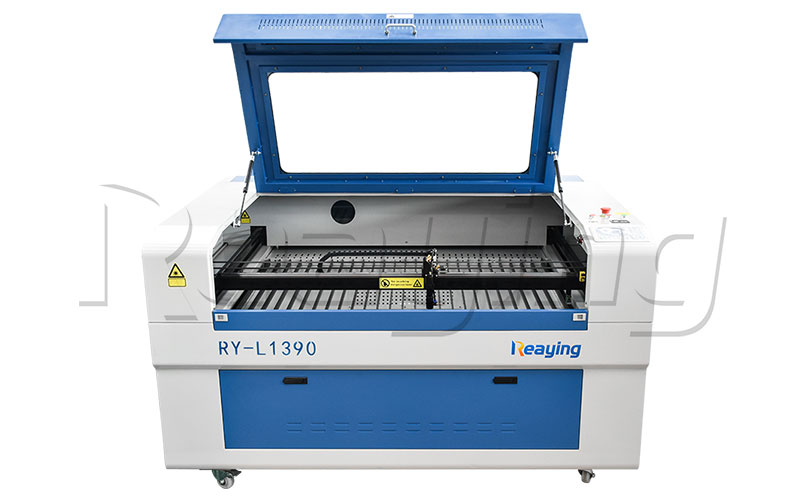
CO2 laser cutting machines are commonly used for non-metal materials such as wood, acrylic, leather, fabric, and paper. Fiber laser cutting machines are generally the preferred option for cutting metal sheets, including carbon steel, stainless steel, and aluminum, when the material and machine specifications are suitable.
Before investing in a laser cutting system, it is important to compare material compatibility, cutting performance, operating costs, maintenance requirements, and production needs. This guide explains the main differences between CO2 and fiber laser cutting machines and helps you determine which option is right for your business.
What Is the Difference Between CO2 and Fiber Laser Cutting Machines?
The main difference is the laser source and wavelength, which affect how different materials absorb laser energy.
CO2 lasers typically operate at a wavelength of approximately 10.6 micrometers. This wavelength is suitable for processing many non-metal materials, making CO2 laser machines common in advertising, sign making, crafts, furniture components, and other applications involving wood, acrylic, leather, and fabric.
Fiber lasers commonly operate around 1.06 micrometers. This wavelength is absorbed more effectively by many metals, making fiber laser cutting machines widely used for sheet metal fabrication, industrial components, metal enclosures, and structural parts.
The two technologies should not be viewed simply as competing versions of the same machine. The best choice depends on what you manufacture and how frequently you process each material.
CO2 vs. Fiber Laser Cutting Machine: Comparison Table
| Comparison factor | CO2 laser cutting machine | Fiber laser cutting machine |
|---|---|---|
| Typical wavelength | Approximately 10.6 μm | Approximately 1.06 μm |
| Main applications | Non-metal engraving and cutting | Metal sheet and tube cutting |
| Common materials | Wood, acrylic, leather, fabric, paper, and other compatible non-metals | Carbon steel, stainless steel, aluminum, and other compatible metals |
| Non-metal processing | Well suited to many non-metal applications | Generally unsuitable for conventional cutting of many common non-metals |
| Metal cutting | Possible on specially configured systems and suitable materials; not the default choice for most metal sheet work | Generally the preferred technology for industrial metal sheet cutting |
| Energy use | Depends on laser tube, power, cooling, extraction, and machine design | Often offers higher laser-source electrical efficiency, although whole-system consumption varies |
| Maintenance | May involve laser tube, mirrors, optics, cooling, and alignment, depending on design | Uses fiber delivery, but cutting heads, protective windows, cooling, and other components still require maintenance |
| Best starting point | Businesses mainly processing compatible non-metal materials | Businesses mainly cutting metal sheets or tubes |
These are general comparisons, not a substitute for machine specifications. Actual cutting speed, maximum thickness, edge quality, and running costs depend on the selected configuration and production conditions.
What Is a CO2 Laser Cutting Machine Best For?
A CO2 laser cutting machine is often the right option when non-metal materials represent the majority of your workload.
1. Wood, MDF, and Plywood
CO2 laser machines are commonly used to cut and engrave compatible wood-based materials. Typical applications include decorative panels, signage, models, wooden crafts, packaging components, and furniture details.
The cutting result depends on wood type, material thickness, moisture content, resin, surface treatment, laser power, and processing settings. Materials with different compositions can produce different edge colors and levels of smoke staining.
For production involving wood, plywood, or MDF, consider the required working area, extraction system, cutting thickness, and expected daily workload.
2. Acrylic and Signage Materials
Acrylic is widely used in advertising signs, display products, decorative letters, display panels, and customized items.
A suitable CO2 laser cutting machine can process compatible acrylic sheets and create detailed shapes without relying on conventional mechanical cutting tools. The final edge quality depends on the acrylic grade, thickness, cutting settings, and machine configuration.
If acrylic cutting is your main application, check the working area and thickness range required for your typical orders.
Reaying’s CO2 laser engraving and cutting machines are worth reviewing for compatible non-metal processing applications.
3. Leather, Fabric, Paper, and Other Non-Metals
CO2 laser machines are also used for selected leather goods, textile products, paper designs, and other compatible non-metal materials.
Typical applications include:
- Leather patterns and accessories
- Fabric components and textile designs
- Paper models and decorative packaging
- Promotional products and craft items
- Customized signs and non-metal components
The exact material must be checked before processing. Coatings, adhesives, synthetic materials, and flame-retardant treatments can affect both processing quality and safety.
Do not assume that every plastic or synthetic material is suitable for laser cutting. PVC and vinyl, in particular, should not be processed with an ordinary laser cutter because they can release hazardous and corrosive fumes.
What Is a Fiber Laser Cutting Machine Best For?
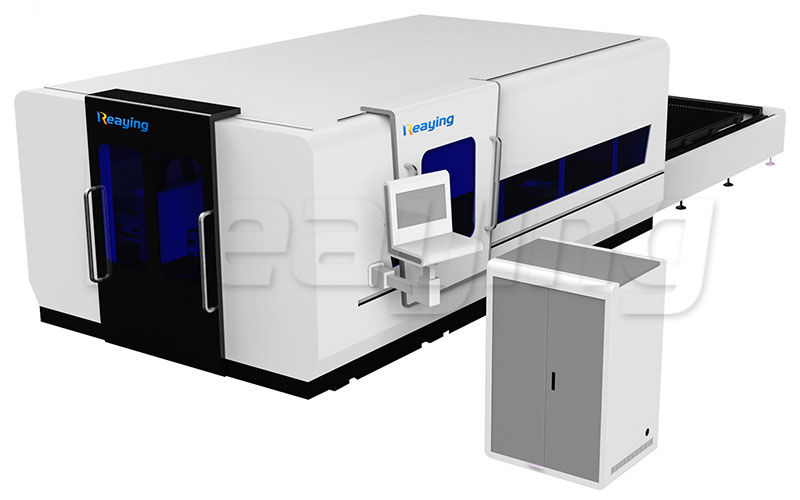
A fiber laser cutting machine is generally the preferred choice for businesses whose primary work involves cutting metal sheets or tubes.
1. Carbon Steel and Stainless Steel
Fiber laser machines are widely used for cutting carbon steel and stainless steel in metal fabrication, industrial equipment, machine enclosures, hardware, and related industries.
The required laser power depends on the material grade, thickness, cutting speed, desired edge quality, and production volume. Auxiliary gas, nozzle selection, focus position, and process settings also affect the result.
A machine that works well on thin sheet metal may not meet the throughput or thickness requirements of a heavier industrial application. Evaluate specifications against your real production requirements rather than choosing by laser power alone.
2. Aluminum and Other Reflective Metals
Fiber lasers are commonly used for aluminum and can be configured for other reflective metals, such as copper and brass, depending on the system and application.
Reflective materials require appropriate equipment, process settings, and protection against back-reflected laser energy where applicable. Maximum thickness and cutting quality vary by material, machine configuration, and processing conditions.
Before purchasing equipment for reflective metals, provide the supplier with the exact material, thickness, and required output quality.
3. Sheet Metal and Tube Cutting
Fiber laser equipment is available in configurations for flat sheets, metal tubes, and combined sheet-and-tube processing.
The suitable machine depends on part dimensions, tube profiles, sheet sizes, loading arrangements, and the level of production automation required.
For additional guidance, read Reaying’s guide on how to choose a fiber laser cutting machine for different metals.
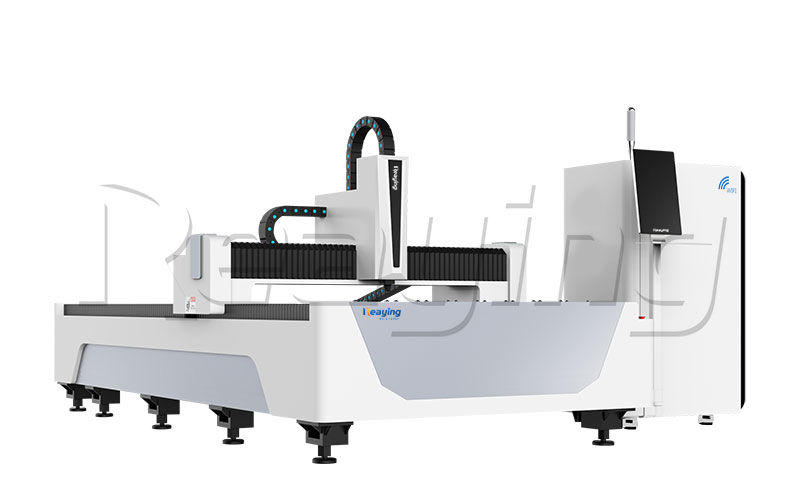
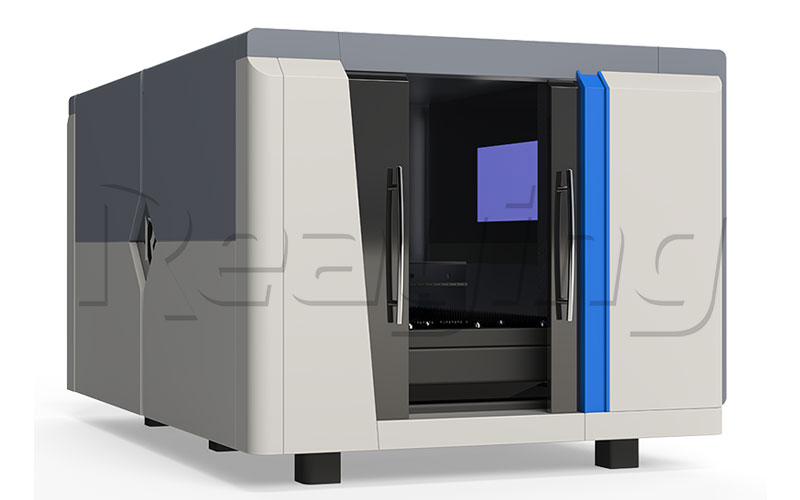
You can also explore Reaying’s fiber laser cutting machine range to review available equipment types.
Which Machine Offers Better Cutting Performance?
There is no single answer for every application. Cutting performance should be evaluated against the material and required production result.
Cutting Speed and Production Volume
Fiber laser machines are often highly effective for metal sheet production, particularly when the material is suitable for the selected laser power and process settings.
CO2 laser machines are generally more appropriate for cutting and engraving compatible non-metal materials. Using a fiber laser for a material that does not absorb its wavelength effectively will not automatically produce a better result.
When comparing machines, evaluate cutting speed at the actual material and thickness you plan to process. Published maximum speeds may not reflect the quality or output achievable in routine production.
Cutting Quality and Edge Finish
Cutting quality depends on several factors, including material composition, thickness, focus position, power, speed, cutting head design, assist gas, and machine motion accuracy.
For acrylic, wood, and similar non-metal applications, the required appearance may include a smooth edge, fine engraving detail, or minimal discoloration.
For metal cutting, important considerations include edge roughness, burr formation, dross, dimensional accuracy, heat effects, and the consistency of repeated parts.
Ask the supplier to process representative samples before making a final decision.
Which Laser Cutting Machine Has Lower Operating Costs?
The total cost of ownership includes much more than the purchase price.
Electricity and Cooling
Fiber laser sources generally convert electrical energy into laser light more efficiently than traditional CO2 sources. However, total machine consumption also depends on the laser power, chiller, extraction system, motion components, and operating conditions.
Compare the actual rated consumption and expected working hours of the machines you are considering.
Maintenance and Consumables
A CO2 system may require maintenance of the laser tube, mirrors, lenses, cooling system, and optical alignment, depending on the design.
A fiber laser system avoids the long free-space mirror delivery path used by many CO2 machines, but it still requires inspection and maintenance of the cutting head, protective windows, cooling system, motion components, and other parts.
Maintenance intervals and consumable costs vary by machine design and operating environment. Request a recommended maintenance schedule and a list of regular consumables from the supplier.
Initial Purchase Price
Purchase price depends on laser power, working area, machine structure, cutting head, control system, automation features, enclosure, and other specifications.
A lower purchase price does not necessarily mean a lower long-term cost. A machine that cannot handle your main production materials or required thickness may lead to slower processing, additional outsourcing, or the need for another machine.
A useful comparison includes purchase price, electricity, maintenance, consumables, labor, expected production output, and after-sales support.
How to Choose Between a CO2 and Fiber Laser Cutting Machine
Use the following steps to identify the technology that best matches your business.
Step 1: List Your Main Materials
Record the materials you process most frequently, including grade, thickness, dimensions, surface condition, and any coatings or treatments.
If most of your work involves wood, acrylic, leather, or compatible non-metal materials, begin by evaluating CO2 laser equipment.
If your main work involves steel, stainless steel, aluminum, or metal tubes, begin by evaluating fiber laser cutting machines.
Step 2: Define Cutting and Engraving Requirements
Decide whether you mainly need cutting, engraving, or both. Also define the acceptable edge quality, dimensional tolerance, and any post-processing requirements.
Different applications require different configurations. Do not assume that a machine optimized for engraving will meet the speed and thickness requirements of production cutting.
Step 3: Confirm Material Thickness and Working Area
Identify the thickest material you routinely process and the largest part or sheet you need to handle.
Ask for model-specific cutting recommendations rather than relying on general claims about maximum thickness. If you process tubes, check the supported tube dimensions, profiles, and loading method.
Step 4: Estimate Daily Production
Consider the number of parts required per shift, typical batch size, loading and unloading time, design changes, and expected machine utilization.
For higher production volumes, material handling, automation, and workflow can affect total output as much as cutting speed.
Step 5: Test a Representative Sample
Provide sample material and an example drawing to the supplier. Evaluate cutting quality, processing time, dimensional accuracy, and repeatability.
For unusual or coated materials, verify compatibility and processing safety before production.
Step 6: Compare Service and Operating Requirements
Check installation requirements, operator training, technical support, spare parts, maintenance procedures, warranty terms, and availability of service.
These factors are important for both CO2 and fiber laser systems and should be included in the final purchasing decision.
CO2 vs. Fiber Laser Cutting Machine: Which Should You Buy?
The best choice depends on your primary materials and production requirements.
Choose a CO2 laser cutting machine as the starting point when you mainly process compatible non-metal materials such as wood, acrylic, leather, fabric, and paper.
Choose a fiber laser cutting machine as the starting point when you mainly cut compatible metal sheets or tubes, including carbon steel, stainless steel, and aluminum.
If your business regularly processes both metal and non-metal materials, one machine may not be the most practical solution. Evaluate the actual workload and compare dedicated equipment or an application-specific combined system where suitable.
Explore Reaying Laser Cutting Machines
Reaying offers equipment for different industrial laser processing applications.
- CO2 laser machines: Explore equipment for compatible non-metal engraving and cutting applications.
- CO2 laser engraving and cutting machines: Review machines for materials such as wood, acrylic, MDF, leather, and other compatible non-metals.
- Fiber laser cutting machines: Explore equipment for metal sheet and tube processing.
- All Reaying products: Review the wider product range.
To identify a suitable configuration, provide your material type, thickness, working dimensions, desired cutting quality, and expected production volume. These details make it easier to assess which machine is appropriate for your application.
Frequently Asked Questions
Can a CO2 laser cutting machine cut metal?
Some specially configured CO2 laser systems can cut certain metal materials and thicknesses. However, a standard CO2 machine designed for non-metal engraving and cutting should not be assumed to be suitable for metal sheet production. Fiber laser systems are generally the preferred option for industrial metal cutting.
Can a fiber laser cutting machine cut wood or acrylic?
Conventional fiber laser cutting machines are generally not suitable for clean cutting of common materials such as wood and acrylic. A CO2 laser machine is usually a better starting point for these applications. Confirm material compatibility with the equipment supplier.
Which machine is more energy-efficient?
Fiber laser sources generally have higher electrical-to-optical efficiency than traditional CO2 sources. Whole-machine power consumption depends on the machine configuration and auxiliary equipment, so compare actual specifications and operating requirements.
Which laser cutting machine requires less maintenance?
Maintenance depends on the specific machine and how it is used. Fiber laser systems avoid some of the optical alignment and laser-tube maintenance associated with many CO2 machines, but fiber systems still require routine inspection and replacement of applicable consumables.
How do I know which laser power I need?
Start with the material, maximum thickness, required edge quality, and target production speed. Request model-specific recommendations and test samples at your actual working conditions before choosing laser power.
Is an enclosed laser cutting machine safer?
A suitable enclosure, protective interlocks, and other engineering controls can help manage laser exposure risks. Safety also depends on the laser system, installation, operating procedures, and material-processing hazards. Follow the manufacturer’s safety instructions and applicable local requirements.
Final Thoughts
CO2 and fiber laser cutting machines serve different purposes. CO2 laser equipment is commonly used for compatible non-metal materials, while fiber laser equipment is widely used for metal sheet and tube cutting.
Instead of choosing solely by price, power, or advertised maximum cutting thickness, match the machine to your actual materials, production volume, quality requirements, and maintenance capabilities.
Review Reaying’s machine specifications, test representative materials, and confirm the recommended configuration before purchasing a laser cutting system for your workshop.
Need Help!!!
Categories
Recent Post

Tag Cloud
About Reaying
Shandong Reaying Machinery Co., Ltd. is one of the leading laser machine manufacturers around the world since 2008 with a registered capital of 3 million yuan. It is a high-tech enterprise focusing on R&D...
Read More