Why Choose a Laser Cutting Machine? Benefits and Applications
A laser cutting machine is a valuable tool for manufacturers that need accurate cutting, flexible production, and repeatable results. Compared with many conventional cutting methods, laser cutting can process complex contours without dedicated cutting dies and can be integrated into computer-controlled production workflows.
However, a laser cutting machine is not automatically the best solution for every material or workshop. The right choice depends on the materials you process, their thickness, the required cutting quality, production volume, and your available budget.
In this guide, we explain the main advantages of laser cutting machines, their common industrial applications, their limitations, and the factors to consider before investing in laser cutting equipment.
What Is a Laser Cutting Machine?
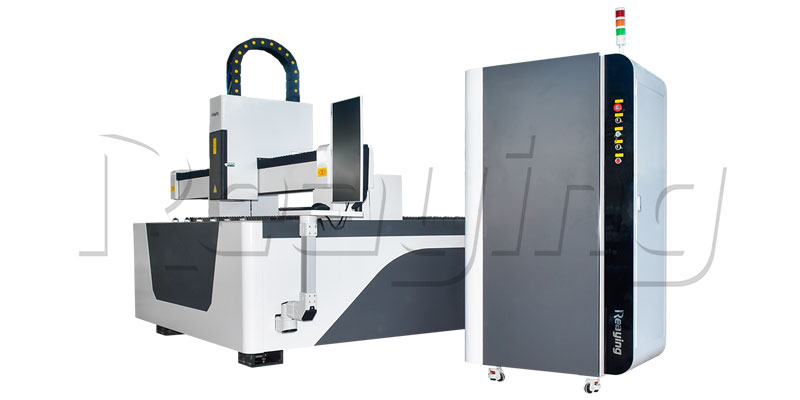
A laser cutting machine uses a focused laser beam to cut material along a programmed path. Depending on the material and cutting process, the beam may melt, vaporize, or otherwise remove material. Assist gas is often used to help remove molten material from the cutting area.
Modern laser cutting systems commonly combine a laser source, cutting head, motion system, control software, and supporting equipment. Many industrial machines use CNC control to follow drawing files and produce parts with defined dimensions and contours.
Different laser sources are suited to different applications. Fiber laser cutting machines are widely used for metal sheets and tubes, while CO2 laser machines are commonly used for compatible non-metal materials such as wood, acrylic, leather, and fabric.
What Are the Main Advantages of Laser Cutting Machines?
1. High Precision and Repeatability
Laser cutting can produce detailed contours, narrow cuts, and accurately positioned features when the machine and process are properly configured.
Because the cutting path is controlled by software, the same design can be reproduced across multiple parts. This is useful for sheet metal components, equipment enclosures, brackets, advertising products, decorative panels, and other manufactured items that require consistent dimensions.
Actual precision depends on the machine structure, motion system, laser configuration, material properties, cutting parameters, and maintenance condition. Manufacturers should evaluate cutting samples against their required tolerances rather than relying on general accuracy claims.
2. Flexible Design and Complex Shapes
Laser cutting makes it possible to change a cutting design by updating the digital file instead of manufacturing a new dedicated cutting die.
This flexibility is valuable when production involves different part shapes, customized products, or frequent design revisions. Complex outlines, slots, holes, and detailed profiles can be programmed within the machine’s processing limits.
For businesses handling multiple product designs, reduced tooling requirements can simplify job preparation and make small-batch production more practical.
3. Non-Contact Processing
Laser cutting does not use a conventional cutting blade that presses directly against the material. The cutting process uses concentrated energy delivered through a laser beam.
This reduces concerns associated with mechanical cutting force and conventional tool wear. It can also help when processing parts that are difficult to hold securely with traditional tooling.
However, workpieces still need appropriate positioning and support. The thermal nature of laser cutting can cause heat-affected areas, burrs, discoloration, or distortion under unsuitable processing conditions.
4. Efficient Job Changes and Small-Batch Production
Laser cutting can be particularly useful when a manufacturer needs to switch between different designs or make customized parts.
A new job may require a revised drawing file, material setup, and suitable process parameters rather than a new physical cutting die. This can reduce preparation effort for some types of production.
The benefit is especially relevant to workshops that manufacture prototypes, customized components, promotional products, and short production runs.
The actual time saved depends on material handling, programming, machine setup, fixture requirements, and the complexity of the job.
5. Potentially High Production Efficiency
When the material, thickness, laser power, cutting head, and assist gas are properly matched, laser cutting can achieve high processing speeds.
CNC operation and automated material handling can further improve workflow by reducing manual positioning and making production more repeatable.
Nevertheless, cutting speed should not be considered in isolation. Loading, unloading, part sorting, material changes, maintenance, and post-processing all influence the number of finished parts a machine can produce in a working shift.
Before purchasing, compare cycle time and expected output using parts that represent your actual production requirements.
6. Reduced Tooling Requirements
Traditional cutting methods may require specific dies, blades, or other tooling for particular product shapes. Laser cutting can create many programmed shapes without a dedicated cutting die for each design.
For suitable applications, this can reduce tooling inventory and simplify product changes. It can also make it easier to produce replacement parts or customized components.
This does not mean laser cutting has no consumable or maintenance costs. Cutting heads, protective windows, lenses, nozzles, filters, and other components may require inspection or replacement depending on the machine type.
7. Efficient Material Use with Good Nesting
Laser cutting software can arrange part outlines on a sheet to help use the available material efficiently. This process is commonly called nesting.
A suitable layout can reduce unused space between parts and help control material waste, particularly in sheet metal fabrication and production involving repeated part designs.
Actual material utilization depends on part geometry, sheet dimensions, cutting allowances, spacing requirements, and how the parts are arranged. Narrow cuts alone do not guarantee minimum waste; a well-planned cutting layout remains important.
8. Integration with Automated Manufacturing
Industrial laser cutting systems can be integrated with CNC controls, CAD/CAM software, loading and unloading systems, and production planning workflows.
Automation can improve consistency and reduce repetitive manual work. In larger production environments, features such as exchange tables, automatic tube feeding, and part sorting may support a more continuous production process.
The level of automation should match the business’s output requirements, available floor space, staffing, and investment budget. A compact machine may be more appropriate for a small workshop, while a high-volume production line may require additional material-handling systems.
Common Applications of Laser Cutting Machines
Laser cutting is used in many industries, but the appropriate laser source depends on the material and required processing result.
Metal Sheet and Tube Processing
Fiber laser cutting machines are commonly used for compatible metal materials, including carbon steel, stainless steel, and aluminum. Depending on the machine configuration, equipment may be designed for flat sheets, tubes, or both.
Applications include:
- Sheet metal components and enclosures
- Machine parts and industrial brackets
- Metal furniture and hardware
- Construction and structural components
- Round, square, and rectangular tube parts
Explore Reaying’s fiber laser cutting machine range for equipment designed for metal sheet and tube processing.
For example, the RY-L1530T integrated sheet and tube cutting machine combines sheet cutting and tube cutting functions in one system.
Wood, Acrylic, and Other Non-Metal Materials
CO2 laser machines are commonly used for compatible non-metal materials. Typical applications include signage, crafts, decorative panels, packaging components, furniture details, and personalized products.
Materials may include suitable wood, plywood, MDF, acrylic, leather, fabric, and paper. Processing capability varies by material composition, thickness, surface treatment, and machine configuration.
Reaying offers CO2 laser engraving and cutting machines for a variety of non-metal processing applications.
Specialized CO2 mixed-cutting systems may support selected thin-metal applications, but this should not be assumed for every CO2 machine. Confirm the exact material range with the equipment supplier.
What Are the Limitations of Laser Cutting?
Laser cutting offers several advantages, but it also has practical limitations that should be considered before purchasing a machine.
1. Initial Equipment Investment
An industrial laser cutting system may require a substantial initial investment. The total price depends on laser power, working area, machine structure, cutting head, control system, enclosure, automation, and supporting equipment.
The purchase price should be evaluated alongside expected production output, labor requirements, consumables, electricity, maintenance, and after-sales support.
A lower-priced machine is not necessarily the most economical option if it cannot meet the production requirements.
2. Material and Thickness Limits
Not every laser cutting machine can process every material. Maximum cutting thickness and achievable quality vary according to the laser source, power, material grade, cutting head, assist gas, and other process conditions.
Some applications may be better suited to plasma cutting, waterjet cutting, mechanical cutting, or another manufacturing process.
Before choosing equipment, provide the supplier with the exact material specifications and the thickness range you expect to process.
3. Heat Effects and Edge Quality
Laser cutting is a thermal process. Depending on the material and settings, it can produce heat-affected areas, discoloration, burrs, dross, or distortion.
The required finish may influence the choice of machine, process settings, assist gas, and any subsequent finishing operations.
For demanding components, request sample cuts and inspect edge quality, dimensional accuracy, and repeatability under representative conditions.
4. Ventilation and Material Safety
Laser cutting may generate smoke, fumes, vapors, and particles. Appropriate extraction and filtration depend on the material, process, machine, and local safety requirements.
Material compatibility must be confirmed before processing. PVC and vinyl should not be cut with an ordinary laser cutter, because cutting can release hazardous corrosive fumes and damage machine components. Illinois University’s laser safety guidance specifically identifies these risks.
Follow the manufacturer’s approved-material guidance, maintain the extraction system, and never operate with an unknown material unless its composition and processing safety have been verified.
How to Choose the Right Laser Cutting Machine
The most suitable equipment should be selected according to real production needs rather than laser power or purchase price alone.
Step 1: Identify the Main Materials
List the materials you will process most frequently, including material grade, composition, thickness, surface treatment, and dimensions.
For metal sheet or tube production, begin by evaluating suitable fiber laser systems. For compatible non-metal materials such as wood and acrylic, a CO2 laser machine may be more appropriate.
If your business processes multiple material categories, check whether one machine can genuinely meet all requirements or whether separate equipment would be more practical.
Step 2: Define the Required Cutting Thickness
Identify the thinnest and thickest materials that make up your normal workload, along with the required edge quality.
Do not select a machine solely because its advertised maximum thickness matches your needs. Confirm the expected cutting speed and quality at your actual material thickness.
Step 3: Choose the Working Area and Machine Format
The working area should accommodate your typical sheet sizes or component dimensions.
If you frequently process metal tubes, check the supported tube diameters, shapes, lengths, and loading method. If you handle large sheets, consider whether loading access and material support are suitable for your workshop.
Step 4: Estimate Output and Production Volume
Consider the number of parts produced per shift, batch sizes, job changes, and expected machine utilization.
For high-volume manufacturing, automatic loading, exchange tables, tube feeding, and other production features may improve workflow. For smaller batches, flexibility and setup time may be more important than maximum cutting speed.
Step 5: Compare Total Operating Costs
Include electricity, assist gas, routine maintenance, consumables, labor, extraction, cooling, and technical support when evaluating the cost of ownership.
Ask the supplier for the machine specifications, recommended maintenance schedule, and details of the components that require routine servicing.
Step 6: Test Representative Parts
Provide the supplier with sample material and representative drawings before making a final decision.
Evaluate cutting speed, edge quality, dimensions, consistency, and any required post-processing. A sample test can reveal whether a machine suits your application more reliably than a general specification sheet.
Step 7: Check Safety and After-Sales Support
Confirm operator training, protective features, ventilation requirements, installation conditions, and access to spare parts and technical support.
Choose equipment that can be operated and maintained according to the manufacturer’s procedures and the applicable safety requirements in your location.
Why Choose Reaying Laser Cutting Machines?
Reaying provides laser processing equipment for a range of industrial applications, including fiber laser cutting systems for metals and CO2 machines for compatible non-metal materials.
- Fiber laser cutting machines: Explore equipment for compatible metal sheet and tube cutting.
- CO2 laser machines: Review equipment for engraving and cutting compatible non-metal materials, alongside specialized configurations for selected mixed-material applications.
- CO2 laser engraving and cutting machines: Find options for wood, acrylic, MDF, leather, and other suitable non-metal applications.
- All Reaying products: Browse the wider industrial equipment range.
When requesting a machine recommendation, provide your material type, thickness, working dimensions, required cutting quality, and expected production volume. These details help determine which machine configuration is appropriate for your needs.
Frequently Asked Questions
What is the biggest advantage of a laser cutting machine?
Laser cutting combines non-contact processing, flexible design changes, and the ability to create detailed contours. The practical benefits depend on the material, cutting requirements, machine configuration, and production workflow.
Is a laser cutting machine suitable for small businesses?
It can be suitable when the machine’s capabilities and total operating costs match the business’s production requirements. Small workshops may value design flexibility and reduced tooling requirements, but should also consider investment cost, maintenance, operator training, and material safety.
Does a laser cutting machine reduce material waste?
It can help reduce waste through narrow cuts and efficient nesting. The actual result depends on part layout, material dimensions, cutting allowances, and the way the job is programmed.
Which is better: a fiber laser or a CO2 laser cutting machine?
Neither is universally better. Fiber laser machines are commonly used for metal sheets and tubes, while CO2 laser machines are often used for compatible non-metal materials. The correct choice depends on the materials and processing requirements.
Can laser cutting replace all conventional cutting methods?
No. Laser cutting is highly flexible, but material properties, thickness, surface requirements, investment costs, and production conditions may make another process more appropriate for some jobs.
What should I provide when requesting a laser cutting machine quotation?
Prepare your material specifications, thickness range, part drawings, required dimensions, expected output, and any edge-quality or automation requirements. Sample processing can help confirm whether the proposed configuration meets your expectations.
Conclusion: Is a Laser Cutting Machine Right for Your Business?
Laser cutting can provide precision, repeatability, flexible design changes, and integration with automated production. These benefits can be valuable for both customized manufacturing and repeat production runs.
However, the best equipment depends on the material, thickness, required quality, production volume, safety requirements, and total cost of ownership.
Review the available specifications, test representative parts, and compare suitable configurations before investing. Visit the Reaying laser cutting machine range or explore the full Reaying product catalogue to identify equipment that matches your manufacturing requirements.
Need Help!!!
Categories
Recent Post

Tag Cloud
About Reaying
Shandong Reaying Machinery Co., Ltd. is one of the leading laser machine manufacturers around the world since 2008 with a registered capital of 3 million yuan. It is a high-tech enterprise focusing on R&D...
Read More